Points programs are easy to launch and copy. That’s why so many loyalty programs feel “fine” on paper, yet stall out in the real world. Customers redeem, but they don’t remember. They earn, but they don’t feel anything. And without emotion, you don’t get the outcomes you actually want: retention, referrals, and repeat purchases.
The better play is to treat loyalty as a customer experience strategy, not a math problem. Pair personalized gifts with brand moments that feel intentional, human, and consistent, and you create loyalty that doesn’t depend on constant discounts or gimmicks.
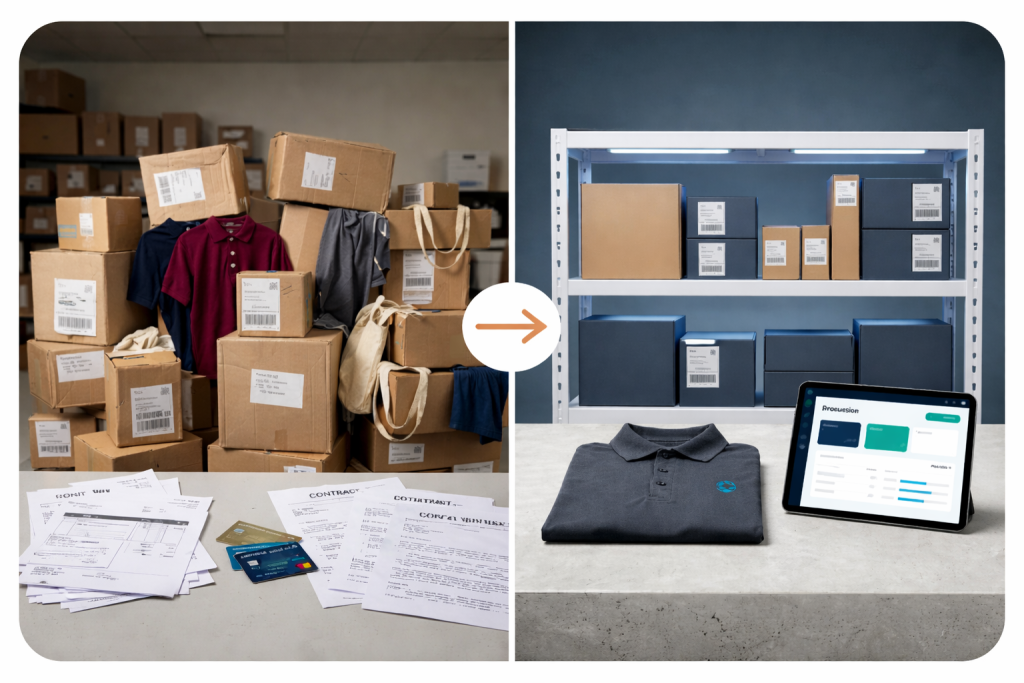
If you want to operationalize gifting at scale (without chaos), request sandbox access and see how an always-on store + fulfillment backbone makes it simple.
Why Most Customer Loyalty Strategies Plateau
Most customer loyalty strategies plateau for the same reason: they confuse activity with attachment.
Points programs reward transactions, not relationships. They can increase repeated purchases for a while, but once customers get used to the incentive, the program becomes background noise. You’ll see it in your customer satisfaction metrics: redemption goes up, but NPS/CSAT doesn’t move much. Renewal rate stays flat. Referral rate doesn’t spike. Average order value (AOV) might lift briefly, then regress.
What’s missing is emotional connection; the part of loyalty that shows up when there’s no coupon, limited-time bonus, or reminder email. Real loyalty is the customer choosing you because the experience felt personal, easy, and consistent. It’s long-term relationships, not transactional behavior.
If your current program is mostly “earn and burn,” you don’t need more points. You need better moments.
Gifting as a Loyalty Lever (Without Feeling Transactional)
Gifting works because it’s built on human psychology, not program mechanics.
First: reciprocity. People feel an internal pull to respond to generosity with generosity, sometimes immediately, often over time. That doesn’t mean customers “owe” you; it means a well-timed gesture can strengthen the customer relationships you’re already building.
Second: the peak-end rule. Customers don’t remember every touchpoint equally. They judge an experience largely by its most intense moment (the “peak”) and how it ends. That’s why the right gift, at the right moment, delivered the right way, can outweigh a dozen “standard” interactions.
So gifting isn’t a giveaway. It’s a way to design peaks and endings across the customer lifecycle, especially for existing customers, where retention is the real profit lever.
Personalized Gifts vs. Generic
Generic gifts are easy, but they’re also forgettable. Personalized gifts win when you want the customer to feel seen, not targeted. The rule isn’t “personalize everything.” It’s “personalized when it changes the story.”
Use personalization when:
- The relationship is high value (strategic accounts, renewals, enterprise expansions).
- The moment is high meaning (milestones, launch success, major adoption wins).
- The customer has earned it through behavior (advocacy, referrals, participation in a case study).
In B2B, personalization doesn’t have to be invasive or overly “data-driven.” It can be simple: a note that references a real outcome, a curated kit aligned to their role, or a choice-based redemption experience that respects preferences.
Examples of a smart client gifting strategy (without going overboard):
- A “launch day” kit for the internal champion who carried the rollout.
- A team pack for cross-functional partners after a major milestone.
- A renewal “thank you” that feels like a relationship marker, not a retention bribe.
Personalization should feel like taste and intention, not surveillance.
Design the Customer Experience Strategy Around Moments
If you want loyalty, stop thinking in campaigns and start thinking in moments. Map the lifecycle and ask: where can we create a peak, reduce friction, and end well? Strong brand moments tend to cluster around:
- Onboarding (the first real experience after the sale)
- Milestones (day 30/60/90, first success outcome, usage thresholds)
- Renewals (the decision point you can’t afford to treat as routine)
- Expansion (when trust converts into a deeper commitment)
- Advocacy (referrals, reviews, speaking, case studies)
This is where loyalty program alternatives beat traditional loyalty programs. You don’t need customers to check a dashboard to “feel loyal.” You need them to remember how the brand made them feel at the moments that matter.
A practical approach:
- Identify 4–6 moments that shape retention (not the full customer journey map).
- Decide what “great” looks like for each moment.
- Build a lightweight gifting + experience layer that reinforces that standard.
Unboxing Experience & Packaging
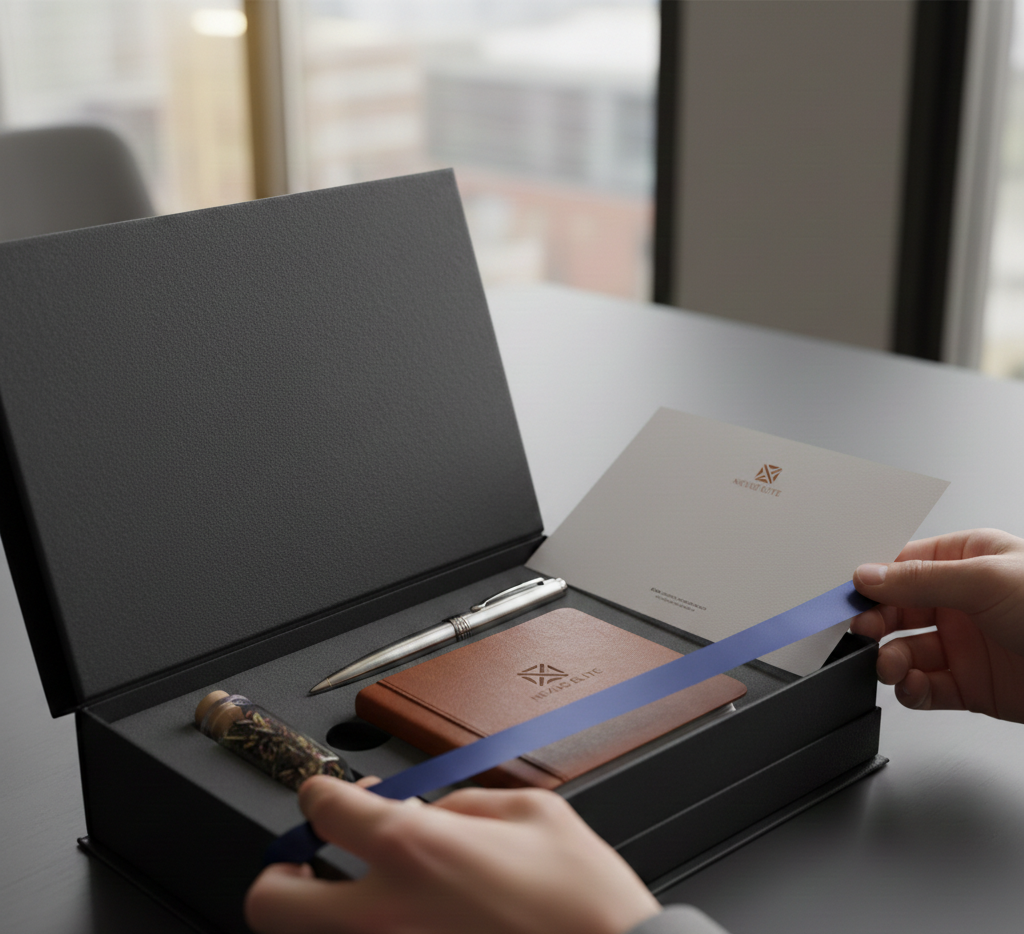
The unboxing experience is not a consumer-only thing. In B2B, packaging is still part of the message, especially when the recipient is your internal champion or executive sponsor.
If you want brand experience examples that actually move the needle, focus on the details customers can touch:
- Packaging that feels on-brand (not generic, not cheap)
- A short note that connects the gift to impact
- Clean redemption/store UX for choice-based gifts
- Consistent presentation across regions and teams
This is where brand consistency matters. A premium brand that ships sloppy boxes creates distrust. A “human” brand that sends a robotic note creates distance. The physical experience is part of your marketing strategy because it shapes memory.
Gift Cards: When They Help, When They Hurt
Gift cards can be a strong tool in your loyalty stack. They’re also an easy way to accidentally make your program feel transactional.
When gift cards help:
They scale. They work globally. They reduce sizing issues and preference mismatch. They’re especially useful when you need to reward a broad customer base quickly, or when you’re gifting across multiple countries.
When gift cards hurt:
They can feel impersonal, like cash with a logo. If there’s no story, no context, and no brand experience around it, it reads as “we needed to do something.”
The solution isn’t “never use gift cards.” It’s to make them feel like part of an experience:
- Pair them with a short, specific note (“Here’s what you made possible…”).
- Use them for choice, not as a substitute for thinking.
- Put them inside a simple branded moment (packaging, messaging, timing).
Also: keep compliance in mind. Customer gifting can intersect with anti-bribery rules (especially for regulated industries, public sector, or global accounts). The standard is typically “reasonable and proportionate,” with clear internal guardrails. And if you’re using customer data to trigger gifts, treat privacy seriously (GDPR/CCPA implications). Don’t over-collect or over-personalize; use customer data with restraint and respect.
Timing, Triggers & Budget Rules
The fastest way to waste gifting budget is to treat it like a random surprise calendar. The fastest way to make gifting feel transactional is to tie it only to revenue. You need both event-based and behavior-based triggers, plus simple governance.
Event-based triggers (relationship markers):
- Onboarding completion
- One-year anniversary
- Renewal signed
- Expansion kickoff
- Executive business review (EBR) follow-up
Behavior-based triggers (momentum markers):
- Advocacy actions (review, referral, speaking)
- Product adoption milestones
- Support partnership (high collaboration moments)
- “Saved the day” moments during a critical issue
Then set budget tiers that match impact. Not every moment needs the same spend; what matters is consistency, quality, and intent. Use a model like:
- Tier 1: broad, light-touch (high volume)
- Tier 2: targeted moments (mid volume)
- Tier 3: strategic accounts/champions (low volume, high intent)
This is how you protect the budget while still building loyalty.
Ops That Make or Break Loyalty Plays
You can have the best strategy in the world, but lose all the goodwill with bad execution. Operational cracks show up as:
- Missed shipping windows (the gift arrives after the moment)
- Wrong items, damaged boxes, inconsistent packaging
- No visibility into inventory or spend
- International shipping headaches
- Teams going rogue (random vendors, inconsistent brand)
This is why fulfillment isn’t “backend.” It’s part of the experience.
If you’re serious about retaining customers through gifting, you need:
- Clear fulfillment SLAs
- QA checks that protect brand consistency
- Predictable shipping windows (especially around renewals and milestones)
- International capabilities (duties, restrictions, timelines)
- A system that makes it easy for teams to execute without creating chaos
Company stores and curated catalogs can simplify execution, especially when multiple teams (CS, sales, marketing) are interacting with the same customers. The goal is fewer “one-off” emergencies and more repeatable, reliable loyalty moments.
Customer Retention Strategies: Measurement & ROI
If you can’t measure it, gifting becomes “nice.” That’s not good enough to drive business outcomes. Tie gifting to desired endpoints with a simple test-and-learn model.
Start with metrics that map to loyalty:
- Renewal rate
- Repeat purchase rate
- Referral rate
- Average order value (AOV)
- NPS/CSAT
- Time-to-renewal (for subscription models)
Then run a basic cohort test. Start by picking one moment (example: renewal outreach at 90 days pre-renewal) and splitting customers into two cohorts: those with and without gifts. Keeping everything else consistent, track renewal rate and time-to-close. You’ll learn quickly what works and for which segments.
Also watch operational metrics:
- Fulfillment SLAs met
- Delivery success rate
- Redemption rate (if applicable)
- Internal time saved (less manual coordination)
That’s how you prove ROI with effective strategies, not anecdotes.
90-Day Plan
Week 1–2: Audit + moments map. Look at your customer journey and identify 4–6 moments that influence retention. Pull baseline metrics (renewal rate, referral rate, NPS/CSAT). Identify where brand consistency breaks today.
Week 3–6: Pilot one moment + one kit. Choose a single moment (renewal, milestone, or advocacy). Build one kit or one redemption flow. Define triggers, tiering, and fulfillment SLAs. Keep it tight.
Week 7–12: Measure → automate. Run the cohort test. Collect qualitative feedback from customers and internal teams. If results are there, automate the trigger and expand to the next moment.
This is how you turn surprise and delight marketing into a real operating system, not a series of one-offs.
Conclusion
If your loyalty program is stuck, don’t automatically add more points, more tiers, or more complexity. Most loyalty program alternatives fail for the same reason points programs do: they ignore how customers actually build trust.
Gifting works when it’s designed as a brand experience, rooted in timing, emotion, and operational excellence. Create peak moments. End well. Protect consistency. Measure what matters. That’s how you turn customer appreciation into long-term relationships that drive retention, referrals, and repeat purchases.
Want to see what this looks like in practice, especially the operational side (stores, kitting, fulfillment, budget control, reporting)? Request sandbox access.