Home / How it works

How everything works together across your organization

When different teams are handling things their own way, it takes a lot of effort to keep everything aligned.

Marketing is ordering materials one way.

HR is managing onboarding and recognition somewhere else.

Sales teams are building their own kits.
Locations are reordering what they need on their own.

It works, but it requires constant coordination.

A better approach gives every team a clear way to get what they need without constant coordination.

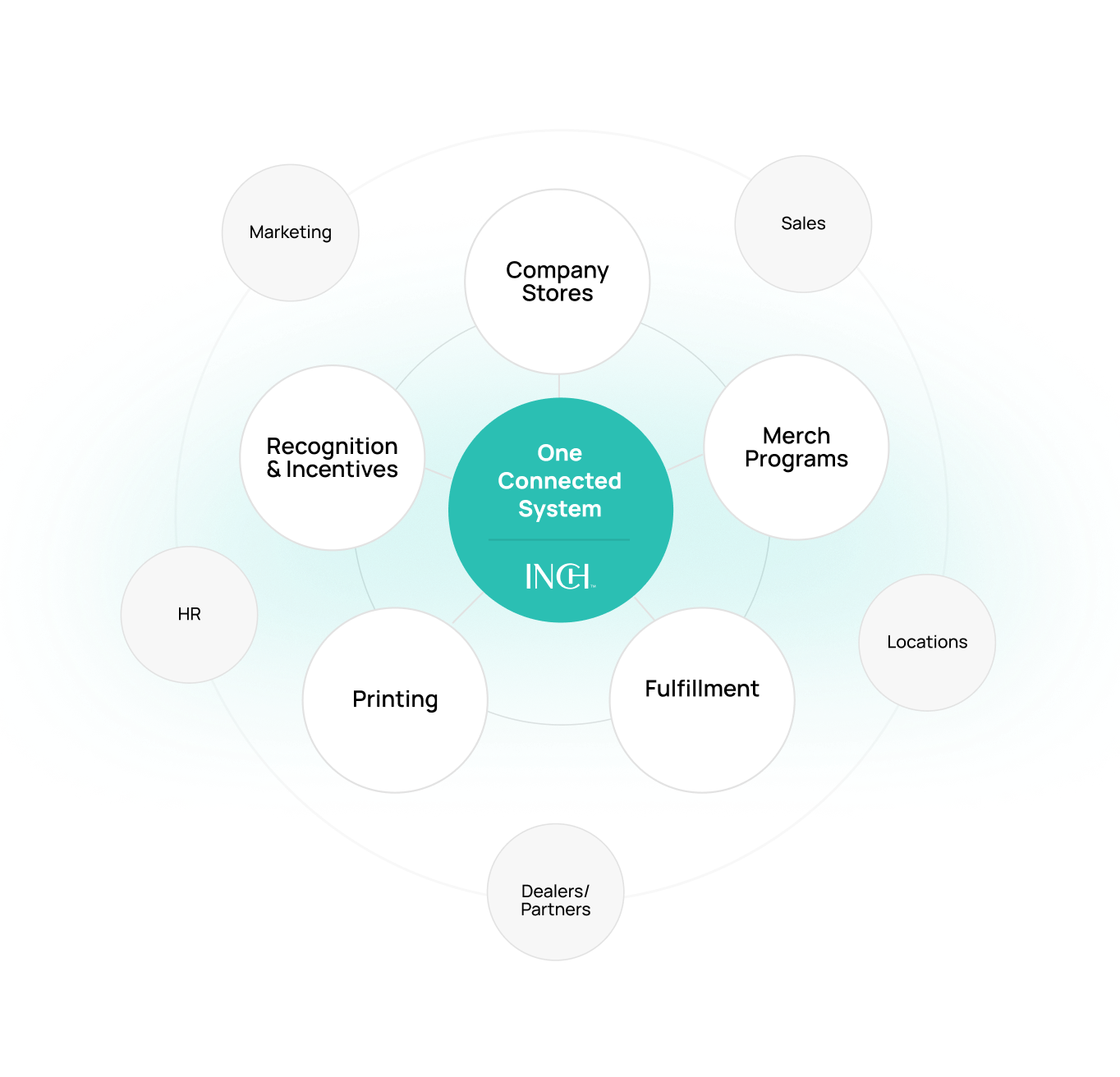
That’s made possible by one connected system—keeping ordering, inventory, and fulfillment aligned without extra effort.

Unified Operations

How everything stays connected

Different teams can still operate independently, but everything runs through the same structure without creating inconsistency.

In Practice

Blend in teal with blend

01

Teams know exactly what to order and where to get it


02

Only approved products and materials are available

03

Orders don’t need to be recreated or approved manually

04

Inventory is visible and ready when needed

05

Everything shows up the same way across locations

What used to require coordination now just happens.

Operational Alignment

How everything stays aligned

Instead of managing multiple vendors, tools, and processes, everything is connected in one place.

Ordering is handled through structured company stores

Inventory is tracked and managed centrally


Fulfillment is consistent across every location


Recognition, kits, and materials follow the same standards


Each part works together, so nothing drifts over time.

Team Enablement

How this supports your teams

Different teams still get what they need, but without creating inconsistency.

  • Marketing can manage campaigns and materials

  • HR can run onboarding and recognition programs

  • Sales teams can access kits and event materials
  • Locations can reorder what they need quickly

Everyone operates independently, but within the same structure.

Structure vs. Fragmentation

Why this works

Without structure

Without structure, every request becomes a one-off:

  • Orders are recreated
  • Vendors are managed separately
  • Inventory is scattered
  • Standards are hard to enforce

Without structure, every request becomes a one-off

With the right structure

With the right structure in place:

  • Standards are built into how things are ordered
  • Processes are repeatable
  • Teams don’t have to figure things out each time

That’s what keeps everything consistent as your organization grows.

Next Steps

Getting started

This doesn’t require a full overhaul all at once.

From there, we bring everything into a more connected structure, so your teams can keep operating without the friction.

We start by understanding how things are currently being handled:

01

Where orders are coming from

02

How vendors are being used

03

Where inconsistencies are showing up

Bring structure to how everything works

If different teams are managing things in different ways, it’s only going to get harder to keep everything aligned.

Let’s take a look at how things are currently handled—and how a more connected system can simplify it.