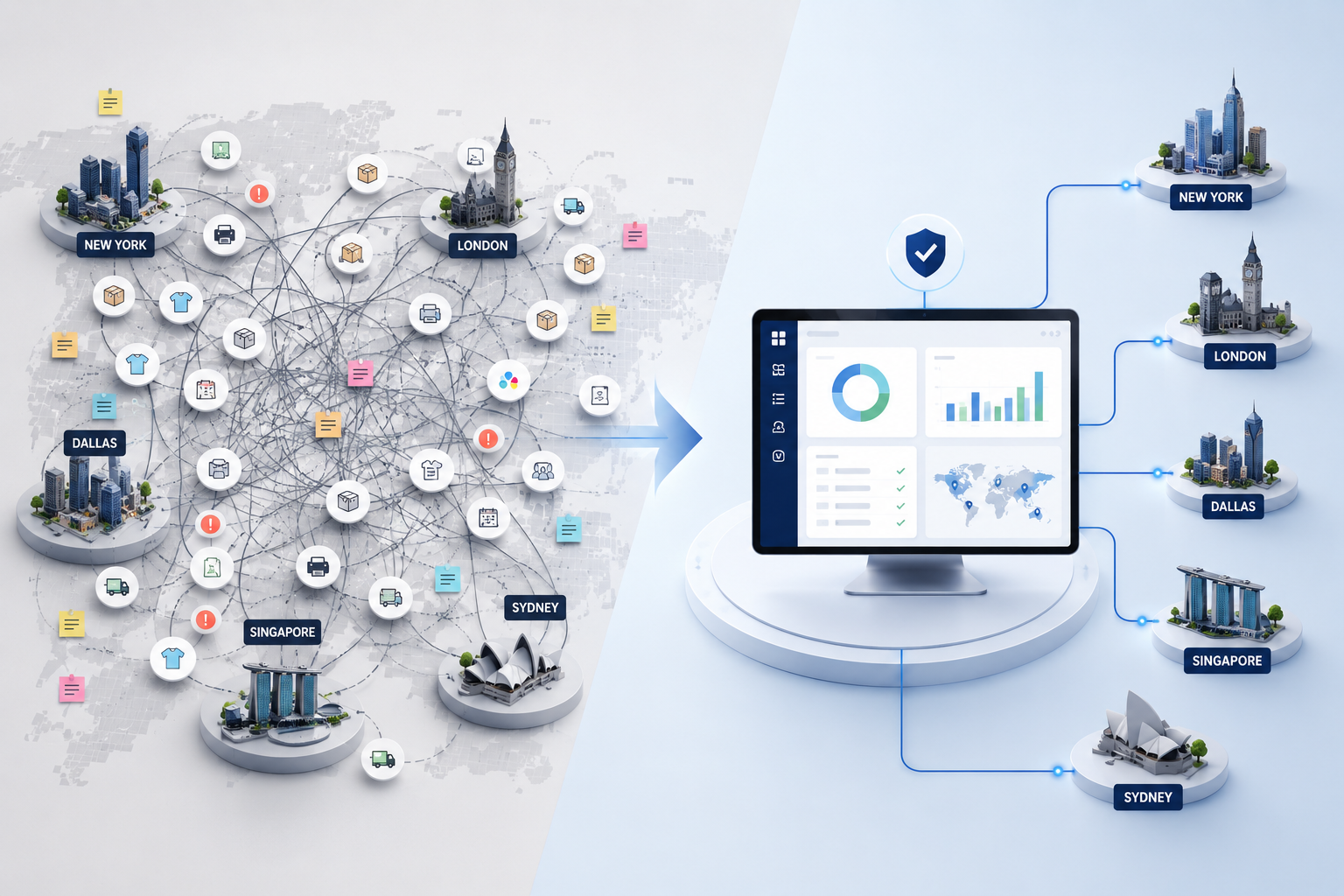
Building a Vendor Management Strategy for Distributed Teams

An unfortunate reality many organizations face is that as they grow, vendor management gets harder and more complex. Different teams and locations build supplier relationships to solve immediate challenges. However, this often means that the organization may find itself working with multiple vendors for similar products or services. Consequently, this approach creates an environment that offers little visibility into who owns those relationships or how performance is being evaluated. 

A vendor management strategy creates a clear structure for deciding which vendors to use, who manages those relationships, what standards they need to meet, and how they work across teams and locations.

However, organizations should consider that the goal isn’t necessarily to have fewer vendors. It’s to know why you’re using each one, who owns the relationship, and whether they’re still the right vendor for the job.

What is a Vendor Management Strategy?

A vendor management strategy is an organization’s structured approach to selecting vendors, assigning ownership, setting expectations, managing relationships, monitoring performance, controlling risk, coordinating purchasing, and reviewing whether vendors are still serving the organization’s needs. 

As companies look to strengthen their vendor management, consider that the overarching strategy sits just above individual vendor relationships. This is key because individual vendors can be managed reasonably well, yet the organization still maintains a poor vendor strategy. 

Often, this happens because the organization might still have several suppliers performing the same role, different standards across locations, unclear decision authority, duplicate contracts, fragmented purchasing data, or a lack of an organization-wide view of performance. 

Managing a vendor is about making one supplier relationship work. A vendor management strategy looks at all of your suppliers together and asks whether the whole thing makes sense.

Why Vendor Management Gets Harder Across Distributed Teams

If an organization is operating out of one location, vendor management is often a straightforward task. However, with growth and expansion into new locations and distributed teams, the challenge increases with every new office. Here are some of the reasons why this happens:

  • Local teams solve local problems: Locations might choose to select vendors based on speed, convenience, or existing relationships, especially when facing urgent needs. 
  • Ownership becomes unclear: The further an organization moves from its central hub, it can be harder for teams to know exactly who is responsible for evaluating vendor relationships across the organization. 
  • Standards vary: Different teams might accept different pricing, quality, service levels, delivery timelines, brand standards, or contract terms. These variations have very real implications on how the brand is perceived.
  • Visibility declines: Without clear management practices, leadership might not know how many vendors are being used, how much is being spent, where duplication exists, and which suppliers are underperforming. 

While decentralized operations often create vendor sprawl, procurement complexity, and hidden inefficiencies, it doesn’t have to. With a strong vendor management strategy, decentralized demand can still be dictated by centralized vendor control. 

How to Build a Vendor Management Strategy for Distributed Teams

1. Map the current vendor landscape

Before organizations can even begin to make changes, leaders need a clear picture of what is already happening. Start by identifying active vendors, what each vendor provides, which teams or locations use them, who owns each relationship, approximate spend, contract status, and areas of duplicate service. In this step, the goal isn’t immediate vendor consolidation, but to gain visibility.

2. Define ownership

Once all the vendor relationships have been identified, determine who has authority over vendor decisions. Consider: who approves a new vendor, who owns the relationship, who evaluates performance, who handles problems, when Procurement becomes involved, and what local teams can decide independently. For a distributed organization to successfully manage vendors, central accountability and clearly defined local authority are essential. 

3. Establish vendor standards

Set clear expectations on what vendors should deliver. Criteria to consider include quality, service, communication, pricing, delivery reliability, geographic coverage, reporting, brand compliance, and scalability. At the same time, avoid creating a universal checklist that assumes each vendor should be judged against the same criteria. Instead, a vendor management framework should be created in a way that reflects the vendor’s role. 

4. Create a preferred vendor structure 

Part of a strong vendor management strategy includes determining which suppliers should be preferred for recurring organizational needs. The goal is to give teams a clear place to go for what they need without forcing them into a system that doesn’t work for them. To make sure this is effective, clearly define when preferred vendors should be used, when exceptions are allowed, when local sourcing is appropriate, or when new suppliers require approval. These guidelines create controlled flexibility, rather than allowing unrestricted purchasing. 

5. Establish a performance review process

Choosing vendors isn’t the end of the line when it comes to vendor strategy. To ensure vendors perform as expected, a review process should look at elements such as service quality, fulfillment reliability, product and material quality, pricing, issue resolution, and compliance with standards. 

6. Review the vendor landscape regularly

Over time, organizational needs change as locations open, programs expand, vendors improve or decline, and new capabilities become necessary. Questions to ask periodically include: Are we using duplicate suppliers? Are some vendors underused? Are teams bypassing preferred vendors? Are vendors still meeting expectations? Are there opportunities to simplify? If the answer to any of these questions is “yes,” it could be time to re-evaluate your vendor management process. 

Central Control Doesn’t Have to Mean Eliminating Local Flexibility

As companies begin to implement vendor management strategies, it shouldn’t automatically force every location to operate the same way. Some teams have legitimate regional or specialized requirements. Instead, determine where consistency matters and where flexibility is appropriate. 

From the centralized perspective, controls might look like approved vendor categories, quality standards, brand requirements, pricing parameters, contract requirements, and reporting expectations. When it comes to individual locations, there should be enough flexibility to account for location-specific needs, regional fulfillment requirements, approved exceptions, and specialized products or services. Ultimately, a strong strategy sets the boundaries so the organizations don’t have to choose between total centralization and vendor chaos.

What Vendor Management Looks Like for Brand-Related Demand

In many distributed organizations, there might be separate suppliers for apparel, print, branded merchandise, employee recognition materials, event materials, packaging or kits, and fulfillment. However, when marketing teams juggle multiple vendors across various product categories, backorders and billing complexity enter the mix. 

Beyond purchasing, this type of fragmentation can create other problems as well, like different logo execution, inconsistent product quality, multiple ordering processes, separate invoices, inventory gaps, fulfillment inconsistencies, and no single view of recurring brand demand. The idea isn’t just to look for the fewest number of vendors. It’s about making branded merchandise, print, recognition, and other recurring needs easier to manage across the organization with fewer disconnected processes, clearer standards, and better visibility.

Signs Your Vendor Management Strategy Needs Work

For organizations unsure if they need to improve their vendor management strategy, here are some critical signs to watch out for:

  • Different locations use different vendors for the same need
  • No one knows how many active suppliers exist
  • Teams regularly bypass preferred vendors
  • Vendor performance isn’t reviewed consistently
  • Similar purchases have significantly different pricing or quality
  • No one clearly owns key vendor relationships
  • Procurement learns about vendors after purchases occur
  • Marketing, HR, and Operations manage overlapping suppliers independently
  • Vendor issues are handled reactively
  • Leadership is discussing vendor consolidation but lacks visibility into what should change

Keep in mind that these aren’t necessarily signs that every supplier should be replicated, but rather that vendor decisions might need a clearer operating structure. 

Conclusion

A vendor management strategy gives distributed organizations a way to decide which vendors they use, who owns those relationships, what standards suppliers must meet, how performance is evaluated, where teams have flexibility, and when the vendor landscape should change. 

The goal shouldn’t just be to cut the number of vendors used without careful consideration. Instead, organizations should seek to replace fragmentation with intentional control. When demand is distributed across teams and locations, vendor management needs a system that creates visibility, accountability, and repeatable execution.

Are You Managing More Vendors Than You Need To?

If different teams and locations are using different suppliers for the same needs, we can help you look at where things could be simplified.

Talk to Us About Vendor Management

How Vendor Sprawl Increases Operational Costs

Vendor sprawl rarely starts with a deliberate decision to build a complicated supplier network. It grows one reasonable decision at a time: Marketing needs apparel quickly; HR launches a recognition program; a regional office needs printed materials; Sales needs products for an event; and Operations finds a local supplier that can meet a deadline.

Each team solves the immediate problem in front of them. As a result, eventually, the organization may have several vendors supplying similar products, separate contracts, different pricing structures, different ordering processes, inventory sitting in multiple places, and little to no consolidated visibility into total spending.

The organization sees the invoices, but what it often doesn’t see is the operational work happening in between. Thus, the real cost of vendor sprawl isn’t just what organizations spend with suppliers; it includes the work, waste, duplication, and risk created by managing fragmented execution.

What Vendor Sprawl Actually Means

Vendor sprawl occurs when an organization accumulates more suppliers than it can effectively govern. It often happens when departments source independently, offices choose local suppliers, acquisitions bring existing vendors into the fold, new programs create new supplier relationships, or urgent requests bypass preferred vendors. Most commonly, it happens because nobody explicitly owns supplier consolidation across categories.

An important distinction to make is that managing multiple vendors is not automatically vendor sprawl. An organization may intentionally use specialized suppliers for highly specific needs. Vendor sprawl exists when those relationships create duplication, inconsistency, limited visibility, administrative complexity, and unclear accountability.

The supplier count is merely the symptom, while the operating structure behind those suppliers determines the true cost.

Why Vendor Sprawl Is Easy to Miss

Most costs appear completely reasonable when viewed individually. On the surface, one regional order, rush shipment, local printer, additional apparel vendor, or employee recognition supplier might not seem disastrous.

However, Finance and Procurement often see these transactions as separate, isolated expenses rather than a repeating operating pattern. Vendor sprawl therefore creates a fragmentation problem because inefficiency appears across dozens or hundreds of small transactions rather than a single, obvious budget overrun. As a result, vendor fragmentation hides cost by distributing it across departments, vendors, locations, and budgets.

The Direct Costs of Managing Too Many Vendors

Inconsistent Pricing

Different offices may pay vastly different prices for comparable items or services. Separate purchasing prevents organizations from combining their volume. Without proactive vendor consolidation, companies miss out on the purchasing leverage that drives meaningful procurement cost savings.

Duplicate Setup and Production Costs

Separate vendors may repeatedly charge artwork fees, setup costs, minimum quantities, freight, and customization charges. Individually, these charges are small. Collectively, across a large organization, they become highly meaningful.

Higher Shipping and Rush Costs

Fragmented ordering inevitably creates smaller orders and more frequent shipments. Teams may also pay expedited shipping because inventory stored elsewhere in the organization isn’t visible to them.

While these direct costs are relatively easy to identify, the harder costs sit directly behind the transactions and make them possible.

The Hidden Administrative Cost of Vendor Sprawl

Every additional supplier creates work. Someone must request quotes, compare products, submit purchase orders, coordinate artwork, approve proofs, manage invoices, track shipments, resolve mistakes, handle returns, reconcile billing, and maintain vendor records. As a result, if five teams manage similar suppliers independently, much of that administrative work is duplicated. We frequently see that this administrative labor is rarely attributed to the actual cost of the merchandise or print being purchased and instead is absorbed as part of someone’s job.

A product can appear inexpensive on an invoice while being remarkably expensive to administer. Consider a misleading product cost: One department might find a slightly cheaper product through a local supplier. However, once you factor in separate setup fees, expedited freight, invoice processing, proof management, and internal staff time, that “cheaper” purchase may no longer represent the lower-cost option.

According to Deloitte’s Global Chief Procurement Officer Survey, top-performing procurement teams actively work to pull themselves from transactional and operational processes to focus on strategic impact. Fragmented vendor systems do the exact opposite, trapping teams in endless administrative coordination.

Vendor Sprawl Creates Procurement Complexity

Fragmented supplier networks make it harder to answer basic organizational questions: How many suppliers do we actually have? What are we buying from each one? Are departments buying the same things elsewhere? Are contracted prices being used? Are approved suppliers being bypassed? Where could spending be consolidated?

When purchasing happens independently across offices, procurement complexity spikes. Instead of managing categories strategically, procurement becomes reactive, spending valuable time finding and correcting exceptions. Effective supplier management and procurement governance are virtually impossible to enforce without a centralized system of record.

How Vendor Sprawl Creates Maverick Spend

When approved processes become difficult, slow, or unclear, teams solve problems themselves. That can mean using a local supplier, placing an order outside a company store, using a corporate card, requesting reimbursement, or choosing a vendor simply because a deadline is approaching.

This behavior is often entirely rational from the team’s perspective. They need the materials, and the internal process isn’t serving them. That means maverick spend can sometimes be a signal of weak infrastructure, not simply poor compliance. Understanding what maverick spend really costs is the first step toward correcting the infrastructure.

Inventory Fragmentation Creates Another Layer of Cost

Different vendors and locations may each hold or produce apparel, printed collateral, event materials, recognition products, and promotional inventory. But without shared inventory visibility, one office may reorder something another office already has sitting in a box. For example, an office in Chicago may have unused printed materials in storage, while the New York team needs the same item for an upcoming event and places a rush order because neither office has visibility into the other’s inventory.

Teams may rush-order products because they cannot see existing stock. Old materials remain unused. Products become obsolete after rebrands or campaign changes. As a result, the organization can simultaneously have too much inventory and not enough usable inventory. Resolving this is why centralized inventory control is critical to managing corporate merchandise inventory across multiple offices.

Vendor Sprawl Can Become a Brand-Control Problem

Different suppliers may interpret your brand requirements differently. The result can be inconsistent logo placement, color variation, different garment quality, outdated artwork, inconsistent printed materials, and vastly different employee or customer experiences between locations.

The financial consequence isn’t just abstract “brand damage.” There are concrete operational costs involved: reprints, replacement products, rejected orders, expedited corrections, and wasted inventory. Brand inconsistency and operational inefficiency often originate from the exact same fragmented supplier structure.

The Accountability Problem: Who Owns the Outcome?

When several vendors support one program, responsibility becomes highly fragmented. Take a standard fragmented program execution: HR manages recognition through one vendor, Marketing uses another company for apparel, Events utilizes a local printer, and fulfillment is handled by a separate logistics partner. No individual supplier is necessarily performing badly, but the internal team has inadvertently become responsible for connecting all four.

When something goes wrong, each fragment of the program seeks to blame another. The product supplier blames the decorator. The decorator blames the artwork. The warehouse blames the inventory count. The shipping carrier owns the delay. The store provider says fulfillment isn’t their responsibility.

Internally, Marketing or Operations becomes responsible for stitching the experience together. That effectively turns the client team into the system integrator. Managing multiple suppliers can mean multiple points of responsibility but absolutely no single point of accountability.

Why Vendor Consolidation Is More Than a Negotiating Strategy

Vendor consolidation is often presented primarily as a way to negotiate better prices. That is only one benefit. Its much larger operational value comes from reducing duplicated workflows, administrative effort, separate billing, disconnected inventory, inconsistent standards, supplier coordination, and internal troubleshooting.

The sole goal isn’t fewer vendors; it’s reducing the number of disconnected systems to manage. This is a foundational step in learning how vendor consolidation reduces operational costs across multiple teams and locations.

Does Vendor Consolidation Mean Using One Vendor for Everything?

While it’s easy to think that vendor consolidation means only one vendor, this is far from the truth. A centralized model may still involve different manufacturers, printers, decorators, fulfillment partners, regional capabilities, and specialist suppliers.

What changes is how those suppliers are governed. Instead of every team managing those relationships independently, the organization creates one accountable structure around sourcing, brand standards, ordering, inventory, fulfillment, and reporting. 

The actual supply chain can remain incredibly sophisticated. The client experience, however, should become vastly simpler.

The Difference Between Supplier Consolidation and Operational Consolidation

While related concepts, there is a clear and important distinction between supplier and operational consolidation. While supplier consolidation means reducing the number of individual vendors, operational consolidation means reducing the number of disconnected processes the organization has to manage.

Operational consolidation may include a single ordering structure, one shared inventory view, common brand standards, centralized sourcing, coordinated fulfillment, consolidated reporting, and clear accountability. This matters far more than supplier consolidation because an organization can reduce 20 vendors to five, but still suffer from immense supplier fragmentation if those five suppliers operate independently.

How to Tell Whether Vendor Sprawl Is Costing Your Organization

If you are unsure whether your current vendor management strategy is holding you back, look for these operational patterns:

  • Several departments buying similar products separately
  • Regional offices using independent suppliers
  • Repeated rush orders
  • Frequent invoice discrepancies
  • Different pricing for similar items
  • Duplicate inventory across locations
  • Inconsistent brand execution in the field
  • Employees unsure of where to order materials
  • No consolidated reporting or visibility
  • Procurement discovering purchases after they happen
  • Marketing coordinating several vendors for just one program
  • Significant internal time spent fixing fulfillment problems

One or two of these issues may be manageable; however, when several appear together, the issue is usually systemic, highlighting exactly why vendor management breaks down across multiple offices.

What a More Controlled Operating Model Looks Like

A more scalable, consolidated model typically establishes a framework that removes the burden from internal teams. This includes:

  • Centralized sourcing: Common standards and coordinated purchasing leverage.
  • Approved products and suppliers: Teams know exactly where to go instead of sourcing independently.
  • Shared inventory visibility: The organization understands what already exists before buying more.
  • Controlled ordering: Teams can obtain what they need without creating yet another procurement process.
  • Coordinated fulfillment: Distribution does not require a brand-new workflow for every new program.
  • Consolidated reporting: Finance and Procurement can clearly see purchasing activity across the entire organization.
  • Clear accountability: Someone definitively owns the entire execution chain.

Conclusion

Vendor sprawl rarely looks expensive at first because each additional supplier may solve a legitimate, immediate problem. But as those independent decisions accumulate across departments and offices, so do administrative work, duplicated purchasing, fragmented inventory, inconsistent pricing, rush costs, brand risk, and procurement complexity. 

The true opportunity is not just cutting the vendor list, but reducing the number of disconnected relationships and processes the organization has to manage to get the job done. When organizations look more closely at the real cost of vendor sprawl, it becomes clear that the danger isn’t having several suppliers, but requiring your own internal team to hold those suppliers together.

Evaluate the Cost of Your Vendor Structure

If multiple offices or departments are independently sourcing apparel, print, recognition, and branded materials, it may be worth looking beyond individual vendor prices and assessing what the fragmented operating model is costing the organization as a whole.

Schedule a System Review

The Hidden Cost of Managing Too Many Vendors

At first, working with multiple vendors feels like flexibility. When different departments need solutions quickly, it is natural to seek out suppliers that offer different products, different price points, and different turnaround times.

But over time, managing multiple vendors creates a very different reality. What begins as a strategy for agility quickly degrades into fragmented processes, rising operational overhead, and severely limited cost control.

The cost of managing multiple vendors rarely shows up as a single line item on a budget report. Instead, it compounds across the entire organization, siphoning time, resources, and budget. The true cost of vendor sprawl isn’t calculated just by the price you pay for goods, but also depends on the operational drag it creates across your entire infrastructure.

What Managing Multiple Vendors Actually Involves

To understand the true cost, we first need to define the real scope of the work. Engaging a supplier is not a single, isolated transaction, but a complex, ongoing process.

Managing multiple vendors includes:

  • Sourcing and selection
  • Onboarding and contracts
  • Communication and coordination
  • Order management
  • Invoicing and payments
  • Performance tracking

Consider a real-life example: A procurement or operations team is tasked with managing 8 to 12 separate vendors across various departments just to fulfill routine organizational needs for apparel, print, and branded materials. That means maintaining 8 to 12 separate contracts, communicating with a dozen different account managers, and navigating completely different ordering processes.

The key insight here is that vendor management shouldn’t be viewed as a single task, but an ongoing operational system. When you multiply those tasks across a growing list of suppliers, the complexity severely impacts procurement operations and team bandwidth.

Why Companies End Up Managing So Many Vendors

How do organizations reach this point? The progression is incredibly natural, particularly in growing companies or those with distributed teams.

The primary drivers of this sprawl include decentralized purchasing, department-level decision making, and a general lack of centralized procurement systems. When teams are pressured to deliver quickly, they prioritize speed over standardization.

Consider this real-life example: The HR department selects a vendor for new hire onboarding kits. Meanwhile, the marketing team selects a completely different vendor for an upcoming campaign, and the field sales team sources their own materials for regional events.

The result is overlapping vendors and massively duplicated effort. Every department thinks they are solving a localized problem, but together, they are building an unmanageable web of vendor relationships and increasing supplier complexity.

The Direct Financial Costs of Vendor Fragmentation

When we examine the direct financial impact, the penalty for vendor fragmentation becomes glaringly obvious.

Lost Volume Discounts

When spend is distributed across dozens of suppliers, order sizes shrink. Smaller order sizes inherently mean reduced negotiating power. Instead of leveraging the total buying power of the organization, individual departments settle for standard pricing, completely missing the financial benefits of scaling their purchases.

Pricing Inconsistency

Without a centralized system, there is no standardization. It is common to see the exact same product type purchased at completely different price points depending on which team placed the order and which supplier they used. This purchasing inefficiency results in continuous budget leakage.

Duplicate Spend

Perhaps the most frustrating financial cost is duplicate spend. Without a unified system of record, teams inevitably purchase the same items from different vendors.

Real-life example: Two distinct departments, like a regional office and corporate headquarters, end up ordering identical branded apparel. Because they use different vendors, they pay different price points, incur separate setup fees, and pay for separate shipping.

The Operational Costs Most Teams Don’t Track

While direct financial losses are damaging, the operational costs are often much worse. These are the hidden expenses that drain productivity and cripple scaling efforts.

Time Spent Managing Vendors

Managing vendor relationships requires continuous communication. Teams get bogged down in emails, follow-ups, and coordination efforts to ensure orders are accurate and delivered on time. Furthermore, every new vendor requires repeated onboarding conversations, taking teams away from strategic work. Time becomes one of the most expensive hidden costs.

Administrative Overhead

More vendors mean a significantly higher administrative burden. Data shows that invoice processing can be a massive drain on resources, with standard processing costs frequently ranging from $15 to upwards of $40 per invoice, depending on organizational complexity. When you multiply that by dozens of vendors, the administrative overhead associated with multiple invoices, contract management, and complex approvals becomes a severe financial drain.

Internal Alignment Costs

Beyond the direct administrative work, there are deep internal alignment costs. When departments use different systems and suppliers, teams must spend time reconciling decisions and dealing with cross-department confusion.

Real-life example: Operations or procurement teams end up spending hours each week simply managing vendor communications instead of optimizing the supply chain. When your team acts as an intermediary between ten different suppliers, they are managing chaos rather than driving value. For a deeper look at how this impacts daily work, review our complete vendor management breakdown.

How Vendor Complexity Slows Down Execution

In modern business, speed is a competitive advantage. Unfortunately, more vendors equal slower processes.

Every additional supplier introduces a new variable. This leads to longer decision cycles, as teams must evaluate which vendor is appropriate for which project. It requires significantly more vendor coordination, immediately increasing the dependency risk. If one supplier in the chain experiences a delay, the entire project stalls.

Real-life example: A marketing initiative requires a coordinated push. Because the apparel is coming from Vendor A, the printed collateral from Vendor B, and the packaging from Vendor C, the logistics quickly break down. The friction of managing multiple suppliers results in direct delays in launching campaigns, shipping onboarding kits, and preparing event materials.

The Impact on Quality and Consistency

When managing apparel, print, and branded materials across distributed teams, your brand is your most valuable asset. Managing multiple vendors actively threatens that asset.

Multiple vendors inevitably lead to inconsistent product quality, severe variations in branding, and unpredictable outcomes. You simply cannot ensure that the specific brand colors used by a printer in Texas match the thread used by an embroiderer in Chicago without a centralized system of record.

Real-life example: Different offices end up receiving vastly different merchandise quality. The onboarding kits delivered to the West Coast team arrive in premium, consistent packaging, while the East Coast team receives flimsy materials with off-brand color matching. This inconsistency damages the brand experience for employees and clients alike.

Why Costs Increase as Organizations Scale

It is a critical reality of procurement operations: vendor complexity grows much faster than most organizations expect.

At a small scale, juggling a handful of suppliers is manageable. But as an organization grows, this model breaks down. At a larger scale, the complexity becomes exponential. More teams, more locations, and more vendors inherently mean more coordination and generate significantly more inefficiency.

Data from The Hackett Group’s 2026 Procurement Key Issues report indicates that procurement workloads are projected to increase by 8%, while budgets and headcount contract. This creates a severe productivity gap that cannot be solved by simply working harder. When organizations scale without reigning in supplier complexity, operational costs spiral entirely out of control.

When Managing Multiple Vendors Becomes Unsustainable

There comes a diagnostic moment for every growing organization when the current model simply stops working.

The signs are clear:

  • Procurement teams are perpetually overwhelmed.
  • There is a distinct lack of visibility into total organizational spend. Maverick spend, where off-contract purchases occur without procurement oversight, can quietly drain immense value from the enterprise.
  • Teams experience inconsistent pricing across similar product categories.
  • Execution becomes noticeably slow, bottlenecked by vendor coordination.
  • The vendor list continues growing with no clear governance or control.

When these symptoms appear, the organization is no longer managing its vendors; the vendors are managing the organization.

How Vendor Consolidation Reduces These Costs

Just auditing the vendor list isn’t a solution; organizations need to change the infrastructure entirely. Vendor consolidation fundamentally shifts how an organization operates.

By partnering with a single system of record for your brand demand, vendor consolidation actively:

  • Reduces vendor count
  • Centralizes purchasing decisions and data
  • Improves negotiation leverage through unified spend
  • Greatly simplifies daily operations

Real-life example: Imagine an organization reducing its branded materials supply chain from 10 fragmented vendors down to just 3; or ideally, 1 reliable partner. The result is immediate: lower operational costs, significantly faster execution, and drastically better control over brand consistency.

Conclusion

Managing multiple vendors often starts as a highly practical decision to solve immediate needs. But over time, that fragmented approach creates deep financial inefficiencies, massive operational overhead, and severely reduced visibility and control.

The organizations that scale effectively don’t have the most vendor options; they have the most structured vendor systems. To maintain control over cost, quality, and speed, enterprise leaders must prioritize operational governance over endless supplier choices.

So, if your organization:

  • Works with multiple vendors
  • Struggles with coordination
  • Lacks cost visibility

You may not have a vendor problem; you have a systems problem.

Evaluate Your Vendor Management Costs

If your team is managing multiple vendors across departments or locations, it may be time to assess whether your procurement structure is optimized for efficiency and scale.

Talk to a Vendor Consolidation Expert

The Hidden Problem With Corporate Merchandise Programs: Vendor Sprawl

Most organizations do not set out to build a supply chain of dozens of disjointed suppliers. Instead, it happens gradually. A department needs an immediate solution, so they source one vendor for new hire onboarding kits. A few months later, the marketing team finds another for event merchandise. Then, the sales team contracts another for branded apparel, while regional offices rely on local suppliers for their immediate needs.

Over time, what initially looks and feels like flexibility quietly turns into deep operational fragmentation.

When analyzing why corporate programs fail to scale, we frequently find that vendor sprawl is one of the most common, and least visible, reasons corporate merchandise programs become difficult to manage. The true problem is rarely just the cost of the goods, the logistics, or the fulfillment. The root cause of operational breakdown is structural: too many vendors, managed independently, across too many isolated teams. Fixing this requires adopting a proactive vendor management strategy that addresses the root of the complexity.

What Vendor Sprawl Looks Like in Corporate Merchandise Programs

To solve the issue, we first must define it clearly. Vendor sprawl occurs when an organization’s procurement process naturally fractures over time. Without a centralized vendor management strategy, multiple teams begin to source merchandise independently. Different vendors are used for the exact same or similar products, and absolutely no centralized procurement structure exists to track or govern the spending.

Consider a real-life example we often see in mid-market organizations:

  • The Marketing department uses one preferred vendor for global events.
  • The HR team uses another completely different vendor for employee onboarding kits.
  • Sales ops uses a third vendor for field kits and client gifting.
  • Regional and satellite offices source locally out of convenience.

The result is a tangled web of 8 to 15 different vendors operating across the organization to provide the exact same category of goods. There is no unified system of record, which means there is no central control over the brand, the spend, or the operational efficiency.

Why Vendor Sprawl Happens

It is important to understand that vendor sprawl is rarely the result of poor intent; we do not blame the teams on the ground. Vendor sprawl happens because of the natural progression of business.

The primary drivers of this fragmentation are decentralized decision-making, a culture that prioritizes speed over established processes, and a fundamental lack of centralized systems. Regional autonomy and the reality of having different program owners across departments inevitably lead to isolated purchasing.

Take the example of a fast-growing, mid-market enterprise. Each department is tasked with solving its own immediate merchandise sourcing needs to hit quarterly targets. Because no shared vendor list exists and corporate procurement is focused on larger software or capital expenditures, departments do what they must to get the job done.

The result is a massive duplication of vendors and highly inconsistent sourcing. The key insight here is that vendor sprawl isn’t indicative of strategic failure, but a natural byproduct of growth without proper supplier coordination.

The Hidden Costs of Managing Multiple Vendors

When we shift from the causes to the consequences, the financial and operational impact of managing multiple vendors becomes undeniable. According to the 2025 Global Chief Procurement Officer Survey by Deloitte, leaders are focusing on renegotiating with existing suppliers, increasing supplier collaboration, and consolidating costs to drive operational efficiencies, yet decentralized purchasing makes visibility nearly impossible.

The true costs show up in three distinct areas:

Pricing Inefficiencies

When spend is distributed across a dozen different suppliers, organizations suffer from smaller order volumes. This inherently means there are no negotiated rates and no economies of scale. We routinely see duplicate spend across vendors, where a company is paying entirely different price points for identical items simply because two different departments placed the orders.

Operational Overhead

Managing multiple relationships requires an immense amount of hidden labor. Procurement and operations teams are burdened with managing multiple invoices, navigating separate contracts, and executing the repeated, tedious onboarding of new vendors. Reducing supplier fragmentation is critical, as decentralized purchasing heavily inflates operational overhead and restricts a team’s ability to act strategically.

Lack of Visibility

Perhaps the most dangerous cost is a complete lack of visibility. When spend is fractured, there is no clear view of total organizational spend. This leads to fragmented reporting and immense difficulty in forecasting future budgets.

Consider a real-life example: A procurement team attempts to track down the total quarterly spend on branded materials, only to find they are managing 10+ vendors with highly inconsistent pricing for identical items, rendering accurate financial forecasting impossible.

How Vendor Sprawl Impacts Brand Consistency

Beyond operational efficiency, vendor sprawl directly threatens your most valuable asset: your brand identity. For a deeper look at how to protect this, we recommend reviewing our complete guide on brand consistency and governance.

When vendor relationships are not centralized, different vendors inevitably produce different levels of quality. They use different base materials, utilize completely different color-matching processes, and deliver inconsistent branding.

Real-life example: Employees at the same company receive entirely different onboarding kits depending on their department. One team receives premium branded apparel in high-quality packaging, while another receives flimsy materials with off-brand color matching.

The key insight is clear: Vendor sprawl goes further than just affecting cost to impact the brand experience of your employees and your customers.

Why Vendor Sprawl Gets Worse Across Multiple Offices

As organizations scale their physical footprint, the complexity compounds. Organizations operating across multiple offices, regions, or countries face significantly higher levels of procurement complexity.

Distributed footprints naturally encourage local vendor sourcing, regional workarounds, and highly inconsistent procurement policies. A global or national company often finds that its US headquarters uses one vendor, the EMEA team uses another, and the APAC offices source entirely locally.

The result is a completely fractured merchandise experience. The brand ceases to look, feel, and operate like a single, unified enterprise.

Vendor Sprawl and the Breakdown of Fulfillment and Distribution

When vendors are fragmented, the physical logistics of moving goods break down entirely. You can explore the granular solutions to this in our breakdown of why programs fail across offices.

When an organization relies on too many suppliers, inventory is spread haphazardly across multiple physical locations. There is no centralized storage and no unified fulfillment process. This lack of infrastructure inevitably leads to missed deadlines, prolonged delays, frequent stockouts, and duplicate orders generated by confused teams.

The key insight is that vendor sprawl doesn’t stop at the purchasing department. It creates downstream chaos in fulfillment and distribution, heavily impacting the end-user experience.

Why Vendor Management Becomes Unsustainable at Scale

There is a distinct breaking point for growing organizations. At a small scale, vendor sprawl is somewhat manageable. A capable operations manager can juggle two or three suppliers.

But at a larger scale, supplier management becomes entirely unsustainable. Coordination breaks down, costs aggressively increase, and visibility disappears. Mature procurement strategies actively seek to reduce complexity because fragmented supply chains inherently increase enterprise risk and operational drag. What works for 2 to 3 vendors fundamentally breaks at 10+.

The Shift Toward Vendor Consolidation

The solution to this operational drag isn’t found in auditing the vendor list, but in actively reducing it. Vendor consolidation means reducing the number of suppliers, centralizing distributed procurement, and creating highly structured, long-term vendor relationships.

By centralizing through one reliable system of record, organizations unlock immediate benefits: significantly better pricing through consolidated volume, heavily simplified daily management, and greatly improved brand consistency across every location.

What Effective Vendor Management Looks Like

To move from concept to execution, a mature vendor management strategy must be systemic. Strong organizations do not leave procurement to chance.

An effective system means the organization:

  • Maintains a strictly controlled vendor list.
  • Centralizes all sourcing decisions through a unified platform.
  • Aligns cross-functional teams on standard procurement processes.
  • Actively tracks vendor performance and quality.

Consider the real-life example of a mid-market company that actively reduces its branded material vendors from 12 down to just 3 (or ideally, 1 reliable partner). By centralizing ordering and standardizing the product catalog, the result is immediate: vastly improved operational efficiency, lower overhead costs, and a perfectly consistent brand experience for every employee and client.

Early Signs Your Organization Has a Vendor Sprawl Problem

How do you know if your organization has crossed the line from flexibility into fragmentation? Here is a diagnostic checklist of the early warning signs:

  • You are using multiple vendors to supply the exact same or similar items.
  • You are paying wildly inconsistent pricing for the same products.
  • Department heads and regional teams are sourcing independently without oversight.
  • Finance and procurement teams have immense difficulty tracking total category spend.
  • You are experiencing inconsistent product quality and brand execution across locations.

Conclusion

Vendor sprawl is rarely intentional, but it rapidly becomes a major barrier to scaling corporate merchandise programs. Without a centralized vendor management strategy, costs consistently increase, brand consistency declines, and daily operations become incredibly difficult to control. For a broader look at how these systemic failures occur, see our analysis on Why Swag Programs Collapse.

The organizations that scale successfully don’t just manage merchandise; they manage the systems behind how it is sourced.

Vendor sprawl is often the first glaring signal that your procurement is fragmented, your operations lack structure, and your corporate programs are rapidly outgrowing their current systems.

Evaluate Your Vendor Strategy

If your organization is working with multiple vendors across different teams or offices, it may be time to assess whether your procurement structure is designed to scale.

Talk to a Vendor Consolidation Expert

Why Vendor Management Breaks Down Across Multiple Offices

Vendor management is often treated as a traditional procurement discipline; a straightforward process of sourcing, negotiating, and paying suppliers. But in organizations operating across multiple offices, teams, and regions, it becomes something much more complex. At scale, it is no longer just about buying, but becomes a critical coordination system across people, locations, and workflows.

Most mid-market companies believe they have a functioning vendor management strategy. In reality, what they usually have is a fragmented network of multiple teams working with different vendors without shared systems or central oversight.

When you look closely at the operational reality of distributed organizations, a clear pattern emerges. Vendor management doesn’t fail because of poor individual decisions or a lack of effort from the teams involved. It fails because it was never designed to operate across distributed organizations. Without a unified system of record, what begins as a controlled process inevitably devolves into operational chaos.

Why Vendor Management Feels Simple at Small Scale

To understand why vendor management breaks down, we have to start with the illusion of control that exists early on. Most companies begin with a highly controlled environment. They rely on a small number of vendors and a centralized decision-maker to maintain clear ownership over every relationship and transaction.

For example, a centralized procurement or marketing lead might manage two or three vendors for all employee apparel, print needs, or corporate services. In this scenario, every variable is controlled, visible, and coordinated. Because the volume of requests is low and the geographic footprint is small, the primary stakeholders can easily monitor inventory, enforce brand guidelines, and track spending manually.

In these early stages, a dedicated vendor management strategy is relatively easy to maintain. The centralized team knows exactly who they are buying from, what they are paying, and what level of service to expect. This creates a false sense of security, leading leadership to believe their current procurement systems will easily adapt as the company expands.

What Changes as Organizations Grow

As organizations expand, the operational dynamics shift dramatically. Growth introduces complexity, and scale fundamentally alters how teams interact with external suppliers. When new offices open, regional teams begin to operate independently, and entirely new vendor needs emerge that the central office may not immediately recognize.

For example, regional operations teams might start sourcing local vendors to fulfill immediate project requirements, while different departments—such as HR and Marketing—begin onboarding suppliers independently to manage localized engagement programs or regional events.

The immediate result is that the vendor count increases quickly. What was once a consolidated list of three strategic partners suddenly balloons into dozens of localized suppliers. According to Deloitte’s research on supplier management, third-party ecosystems are becoming more complex than ever, yet the internal functions required to manage these networks remain vastly underpowered in most organizations. As the organization grows, the systems used to track these relationships rarely keep pace.

The Breaking Point: When Vendor Management Becomes Fragmented

There is a definitive breaking point in every growing organization where the illusion of centralized control shatters. At scale, vendor management becomes distributed, unstructured, and highly reactive.

Instead of a centralized vendor strategy dictating how resources are acquired and managed, each team begins managing its own vendors. A regional director in one office might prioritize speed of delivery, while a manager in another office prioritizes localized customization. Because there is no unified procurement infrastructure to govern these decisions, the organization loses its grip on standard operating procedures.

We see this transition consistently in mid-market organizations. The breaking point occurs when the volume of decentralized transactions surpasses the central team’s ability to monitor them. At this stage, the organization stops managing vendors and starts simply reacting to immediate demands, resulting in deep supplier fragmentation across the enterprise.

Why Vendor Management Breaks Across Multiple Offices

When vendor management fractures across distributed teams, the operational failures usually stem from a specific set of internal drivers.

Decentralized Decision-Making

Without a system enforcing a unified vendor management strategy, teams naturally begin to choose vendors independently. For example, the marketing team in one region might use Vendor A for branded materials, while another region uses Vendor B for the exact same requirements.

This happens because there are no shared standards dictating how sourcing should be handled across locations. Decentralized decision-making leads to wildly inconsistent brand execution and erratic operational workflows. In fact, McKinsey has noted that managing a large number of disjointed vendors makes standardizing performance and quality nearly impossible. When every regional office acts as its own procurement hub, the organization loses the ability to enforce quality, compliance, and strategic alignment.

Lack of Vendor Visibility

When decision-making becomes decentralized, the immediate casualty is operational visibility. There is no central tracking mechanism to monitor who is buying what and from whom.

For example, the finance department often doesn’t know how many vendors currently exist in the system, how much total capital is being spent across similar categories, or where exact duplication is happening. Deloitte’s insights on integrating procurement and finance highlight that without a holistic view of spend data and supplier performance, organizations cannot make informed strategic decisions. When visibility is lost, financial blind spots grow, and the organization assumes unnecessary financial risk.

Duplicate Vendors and Overlapping Services

A direct consequence of poor visibility is the proliferation of duplicate vendors and overlapping services. It is remarkably common for distributed organizations to have the same vendors operating under entirely different contracts for different regional offices.

Alternatively, multiple teams end up working with different printers, different swag suppliers, and different local agencies, often for identical services that could easily be centralized. This redundancy bloats the supply chain and creates administrative nightmares for accounts payable, forcing them to process hundreds of disparate invoices rather than managing a streamlined, consolidated supplier network.

Inconsistent Pricing and Terms

When teams source independently, the organization completely forfeits its purchasing leverage. Rather than combining their volume to negotiate enterprise-grade contracts, regional offices secure isolated agreements.

For example, one team might successfully negotiate bulk pricing based on their specific regional volume, while another office pays full retail price for the exact same product from a different supplier. This localized purchasing creates massive budget leakage. To understand the true financial impact of this inefficiency, organizations must evaluate what maverick spending really costs organizations and recognize that decentralized buying strips the company of its most valuable negotiating asset: scale.

Fragmented Supplier Relationships

A high volume of unmanaged suppliers inevitably leads to fragmented supplier relationships. When there is no centralized relationship ownership, vendors are forced to interact with multiple, uncoordinated stakeholders across the company.

This lack of alignment means vendors receive mixed signals, differing requirements, and conflicting priorities from the same client. The result is inconsistent service, frequent miscommunication, and missed expectations. Without a unified point of contact or a standardized platform for interaction, the burden of managing the supplier relationship shifts to regional employees who are neither trained nor equipped to act as procurement managers.

Why These Problems Accelerate in Multi-Location Organizations

These issues do not just appear in distributed organizations; they actively accelerate due to the structural realities of multi-location footprints. Distributed organizations introduce distinct challenges such as varying time zones, regional autonomy, and hyper-local sourcing needs.

For example, local teams frequently prioritize speed above all else. If a regional manager needs branded apparel for an event next week, and the central procurement process takes two weeks to navigate, they will bypass central procurement entirely and find a local shop to get the job done. This well-intentioned desire to execute quickly accelerates fragmentation. The larger the geographic footprint, the faster this bypassing behavior multiplies, compounding the volume of unmanaged vendors and eroding any remaining operational control.

The Hidden Cost of Broken Vendor Management

The consequences of this operational breakdown extend far beyond administrative headaches; they actively drain resources. The hidden costs include chronic overspending, the administrative burden of duplicate vendors, deep workflow inefficiencies, and entirely lost negotiation power.

Companies often don’t realize they are paying significantly more for the same services across different teams. They are absorbing the costs through increased invoice processing fees, redundant shipping costs, and the wasted labor hours of internal teams trying to track down rogue orders. When vendor coordination fails, the financial impact quietly erodes the bottom line month over month.

Why Traditional Vendor Management Strategies Fail at Scale

Most organizations attempt to solve this problem by applying conventional logic, but traditional vendor management strategies fundamentally fail at scale. Most standard procurement strategies assume three things: centralized control, a limited number of vendors, and clear, unified ownership.

But at scale, those foundational assumptions break entirely. A spreadsheet and a central approval process might work perfectly when an organization is managing three suppliers from a single headquarters. However, what works for three vendors does not work for 30+ vendors distributed across autonomous offices. Organizations outgrow their manual processes long before they realize it, leading to a total collapse of their vendor management strategy.

The Pattern Behind Vendor Management Failure

Across mid-market organizations, the unifying idea behind this failure is a fundamental misunderstanding of the task. Vendor management is almost universally treated as a process, instead of being engineered as a robust system.

When organizations view sourcing as a series of isolated tasks, request, approve, purchase, and pay, they fail to build the necessary infrastructure to support those tasks across locations. Without infrastructure, coordination breaks, visibility disappears, and control is ultimately lost. To maintain consistency across a distributed footprint, organizations must stop relying on manual processes and start implementing systems of record.

What Scalable Vendor Management Actually Requires

Fixing this fragmentation requires a shift in how the organization approaches external demand. Scalable systems require centralized vendor visibility, tightly controlled onboarding protocols, aggressive vendor consolidation, and clear procurement governance.

For example, instead of allowing each regional team to independently onboard local vendors, organizations must implement one system that manages vendor relationships across the entire enterprise. As we outline in our analysis of How Vendor Consolidation Reduces Operational Costs Across Distributed Teams, consolidating suppliers into a single, reliable platform eliminates redundancy, restores purchasing power, and ensures that brand quality remains consistent regardless of which office is placing the order.

Early Signs Your Vendor Management Is Breaking Down

Organizations rarely notice that their vendor management strategy is failing until the administrative pain becomes unbearable. However, there are clear diagnostic signs that precede a total breakdown.

These early indicators include having too many vendors on the ledger, identifying duplicate services across different regions, experiencing wildly inconsistent pricing for similar goods, and suffering from a general lack of visibility. The most telling diagnostic question is simple: If no one in your finance or operations team can quickly answer “how many vendors do we currently have?”, you already have a systemic problem. Multiple contracts for similar work across regions are a definitive signal that your infrastructure is lacking.

Vendor Management Doesn’t Scale Without Infrastructure

Ultimately, the solution requires a shift in perspective. Vendor management is not just about initial selection, aggressive negotiation, and maintaining friendly relationships.

To operate successfully across a distributed organization, vendor management must function as a coordination system, a visibility system, and a control system. It requires a dedicated procurement infrastructure designed to govern repeat demand. When an organization integrates its procurement requirements into one reliable system, it removes the burden of vendor management from local teams, ensuring consistency, compliance, and continuity across the entire network.

Conclusion

Vendor management almost always starts as a highly controlled, centralized function. But as organizations expand across new teams and geographic locations, operational complexity naturally increases. Without robust systems built specifically for visibility, coordination, and governance, even the best vendor management strategy will inevitably become fragmented and inefficient. Organizations that scale successfully do not just hire more procurement staff; they treat vendor management as essential enterprise infrastructure, utilizing single systems of record to keep every location aligned, efficient, and consistent.

Evaluate Your Vendor Management Infrastructure

If your organization is:

  • working with too many vendors
  • struggling with visibility
  • duplicating services across teams

You’re not facing a sourcing issue; you’re facing a systems issue.

If your organization manages vendors across multiple teams or locations, it may be time to assess whether your vendor management strategy is supported by the systems required to scale.

Talk to a Vendor Consolidation Expert